Yoga and meditation teachers
If you already teach, sound is a gentle way to deepen relaxation at the end of a class or to run a separate sound bath for your students.
Avatar Yoga School's sound healing teacher training in Rishikesh is a short, residential course in which you learn to play singing bowls, gongs, chimes, tuning forks and your own voice, and to lead calm group sound baths with care. You practise on each other first, so you know how every instrument feels before you offer it to others.
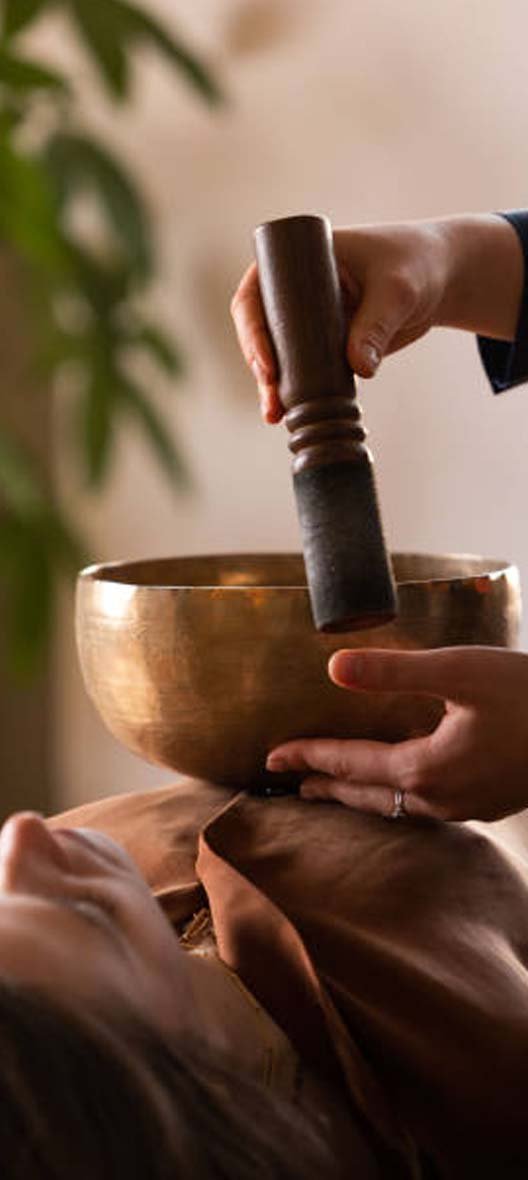
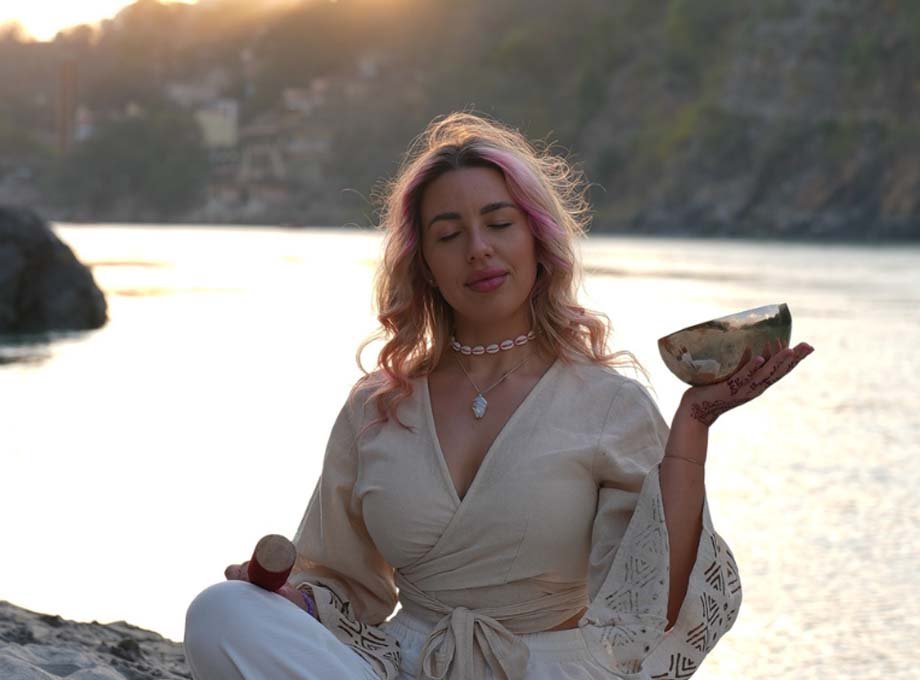
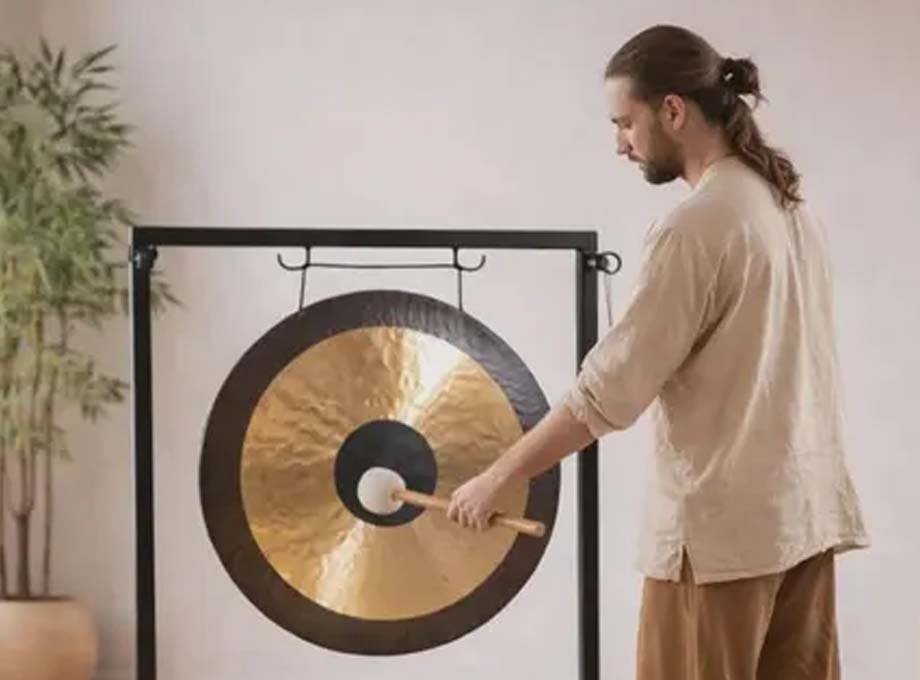
A sound healing teacher training is a short course that teaches you to use sound, such as singing bowls, gongs, chimes, tuning forks and the voice, to guide relaxation and meditation for individuals and groups. At Avatar Yoga School in Rishikesh you study the instruments, the basics of how sound affects the body and mind, and the craft of leading a safe, quiet session.
Sound has been part of yoga and meditation for a long time. Chanting, mantra and the sound Om are old practices, and bowls and gongs have long been used in Himalayan and other traditions. In recent years sound baths have become popular in yoga studios and wellness centres, and many yoga teachers want to add them to their classes.
The course is practical. You spend most of your time playing, listening and practising sessions on your classmates, with teachers who correct your technique and your pacing. You also learn what to say, what not to promise and how to look after a group of people who are lying down with their eyes closed.
You do not need to be a musician or a yoga teacher. You do need patience and a willingness to be quiet. If you also want a foundation in yoga, see the 100 hour or 200 hour yoga teacher training in Rishikesh.
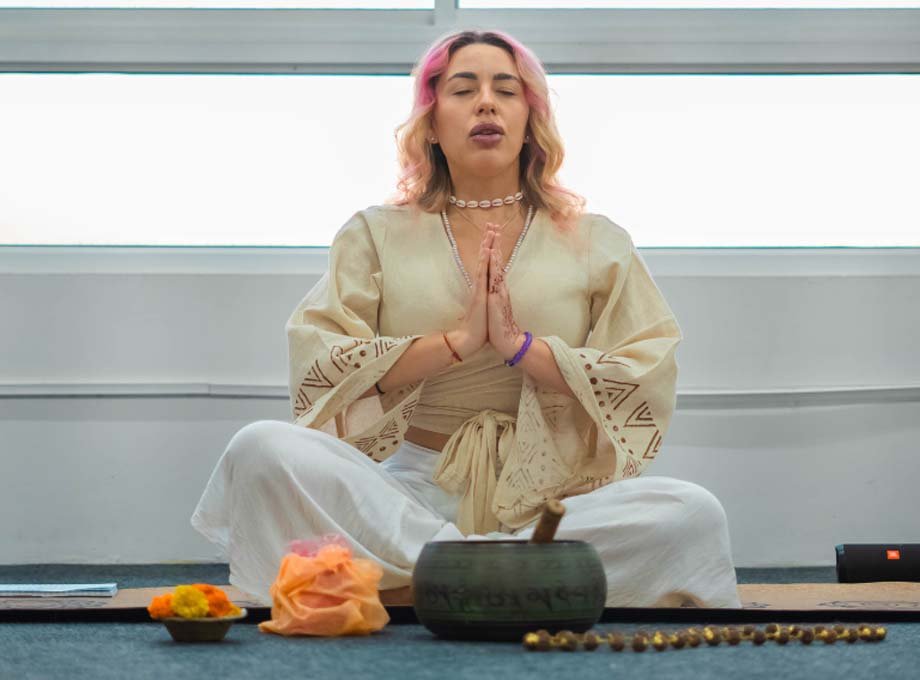
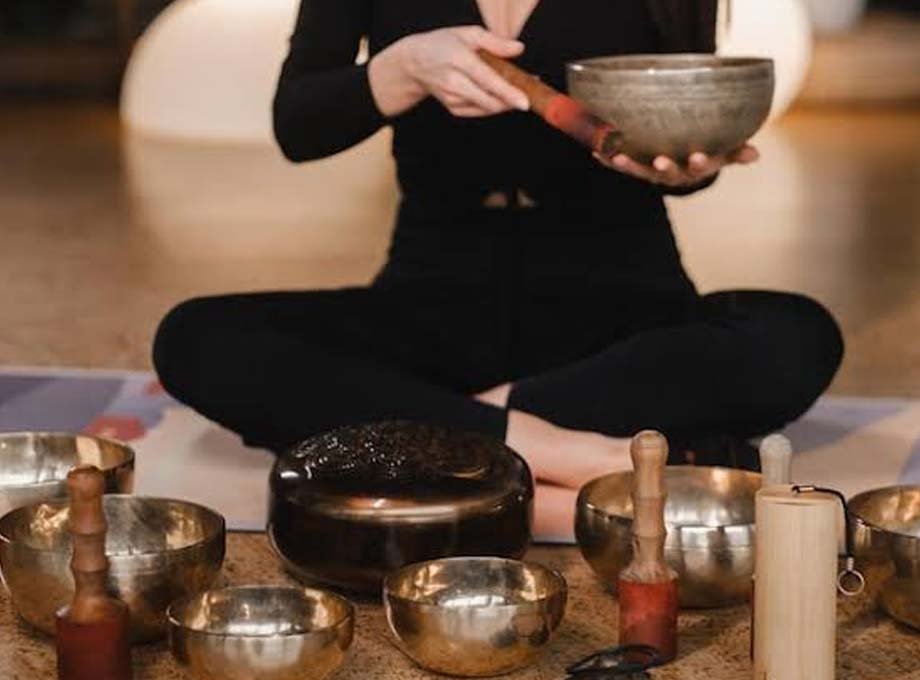
Many people find sound baths deeply relaxing, and small studies suggest that sound meditation with singing bowls can ease feelings of tension and low mood. The research is still limited, though, and most studies are small and short. Sound healing is best seen as a way to relax and support well-being, not as a treatment for illness.
That honesty matters for anyone who plans to teach. A good course teaches you to describe your work accurately. You invite people to rest and to listen. You do not promise cures, you do not tell anyone to stop medical treatment and you refer people to a doctor when something is outside your training.
Ask any school how it talks about health claims before you enrol. The answer tells you a lot about the quality of the teaching.
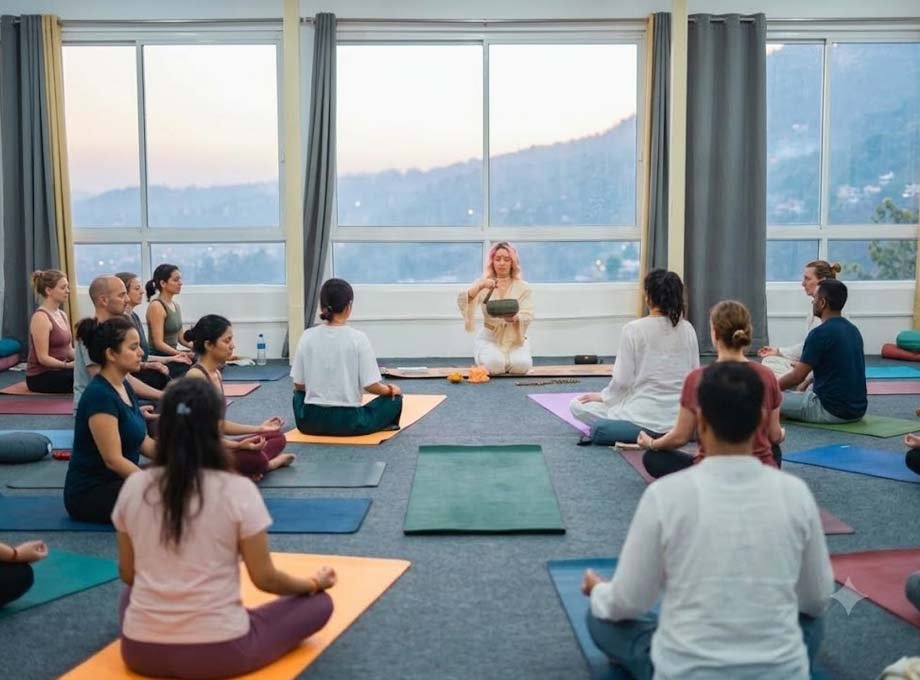
The course suits yoga teachers, wellness practitioners, musicians and curious beginners. You do not need to read music or to play an instrument.
If you already teach, sound is a gentle way to deepen relaxation at the end of a class or to run a separate sound bath for your students.
Massage therapists, coaches and counsellors often join to add a calm, listening based session to their work, within the limits of their own training.
If you love instruments or singing, the course shows you how to use sound slowly and quietly, with less performance and more attention.
You may simply want to learn how bowls and gongs work and to spend a few quiet days in Rishikesh. Teachers start from the basics, so nothing is assumed.
The syllabus covers six areas: singing bowls, gongs and chimes, tuning forks, voice and mantra, the basics of sound and the body, and leading sessions with ethics and safety.
Learn to hold, strike and play Tibetan and crystal bowls so that they ring clearly and evenly. You practise rhythm, volume and silence, and you learn how to choose and care for your bowls.
Study how gongs, chimes and bells are played, from soft washes of sound to slow builds. Teachers show you how to avoid loud, sudden sounds that startle a quiet room.
Learn the basics of tuning forks and how to use them for listening and relaxation, with care about contact and placement. You also learn when not to use them.
Use your voice with Om, simple chants and humming. You do not need a trained singer's voice. Classes focus on breath, steadiness and sitting with the sound in the body.
Explore the basics of hearing, the nervous system and relaxation, together with the yogic ideas of nada, or sound, and the chakras. The aim is a clear, honest understanding, not big promises.
Learn to plan a sound bath, arrange the room, guide the group in and out of silence and handle questions with care. You also cover ethics, consent, safety and the limits of your role.
The instruments and topics can change by batch. Ask the team for the current syllabus before you book.
A typical day mixes gentle yoga, hands-on instrument practice, short classes and a quiet sound bath in the evening. Timings shift a little with the batch, so ask for the current timetable.
Ask for the current timetable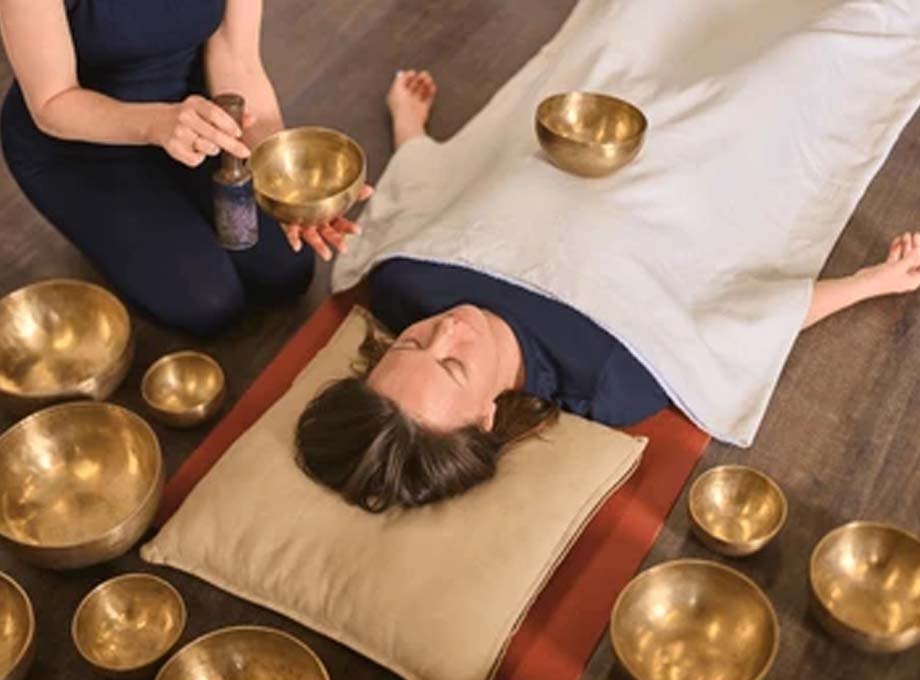
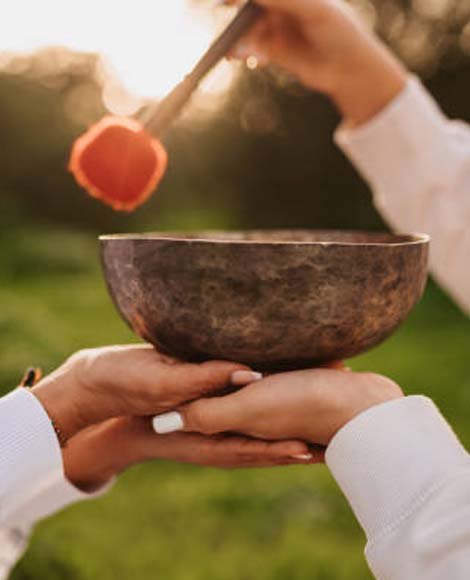
For most healthy adults, a calm sound bath is safe. Still, sound and vibration affect people differently, so a responsible practitioner asks questions first and keeps the volume gentle and the pace slow.
Be careful, and talk to your doctor first, if you have a pacemaker or another implanted device, epilepsy, serious hearing problems or tinnitus, or a history of panic attacks or trauma. Pregnant students should tell the teachers, because bowls and forks should not be placed on the belly during pregnancy.
In class you learn how to ask guests about their health, how to set the volume, how to end a session slowly and what to do if someone feels unwell or emotional.
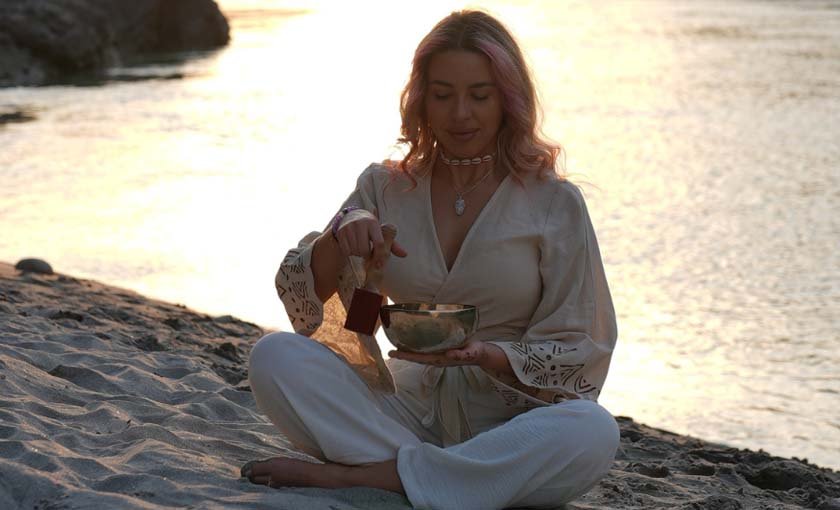
You receive a certificate of completion from Avatar Yoga School. Sound healing is not a Yoga Alliance teacher credential, so the course does not lead to RYT registration. The certificate shows that you completed the training and can lead group sessions.
Rules differ by country and by studio. Some places ask for insurance, and some count sound healing hours as continuing education for yoga teachers. If you hold a Yoga Alliance registration, ask the team whether this course can count towards your continuing education hours.
Whatever the certificate says, your skill comes from practice. Plan to keep playing, to lead free sessions for friends and to keep learning from experienced practitioners after the course.
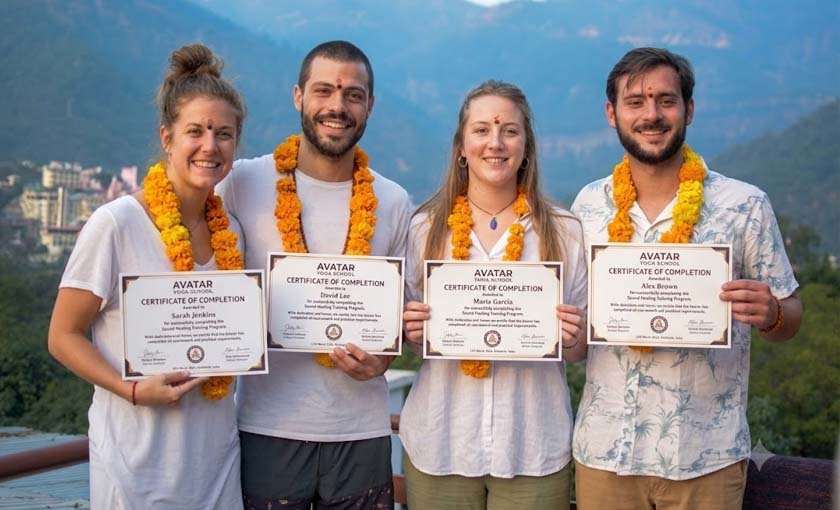
After the course you can lead group sound baths, add sound to yoga or meditation classes, run workshops and offer private sessions for relaxation, within the limits of your training and local rules.
Many graduates start with a monthly sound bath in a studio, a cafe or a community space, then grow the group by word of mouth.
A short bowl or gong session at the end of a class gives students a deeper rest. Yoga teachers often find it easy to add.
Workshops on listening, breath and voice suit wellness centres and retreats. The session design classes prepare you for them.
Sound practice grows slowly. Many graduates keep studying with other teachers and add new instruments over the years.
Check four things before you book: how much of the course is hands-on, which instruments you learn, how the school talks about health claims, and who teaches.
Ask how many hours you will spend playing and leading sessions. You cannot learn sound by listening to lectures alone.
Check which instruments are included and whether you can practise on good ones. Ask what you need to buy and what you can borrow.
Be careful with any school that promises to cure illness. Good teachers talk about relaxation, listening and well-being, and they teach safety and ethics.
Ask who teaches and how many students share the instruments. Small groups mean more time to play and more feedback.
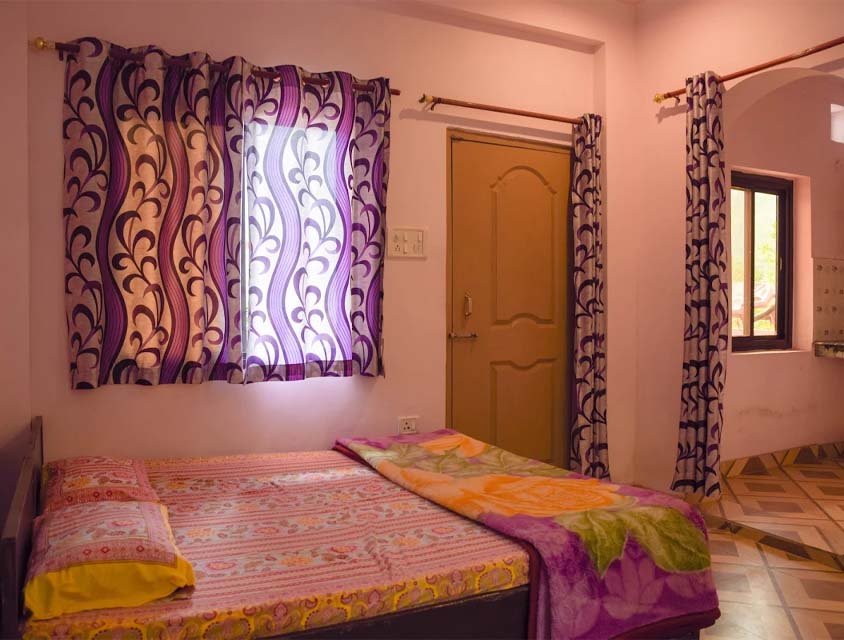
The fee depends on the room you choose. It covers tuition, accommodation, vegetarian meals and course materials, per person for the full course.
These sessions are included in the course fee at no extra cost.
Ask the team for the current fee for your batch. The payment page explains the booking advance and refund terms.
The course fee usually covers tuition, use of the school's instruments in class, accommodation, vegetarian meals and course notes. Flights, visa, insurance and any instruments you choose to buy are extra. Ask for the exact list for your dates.
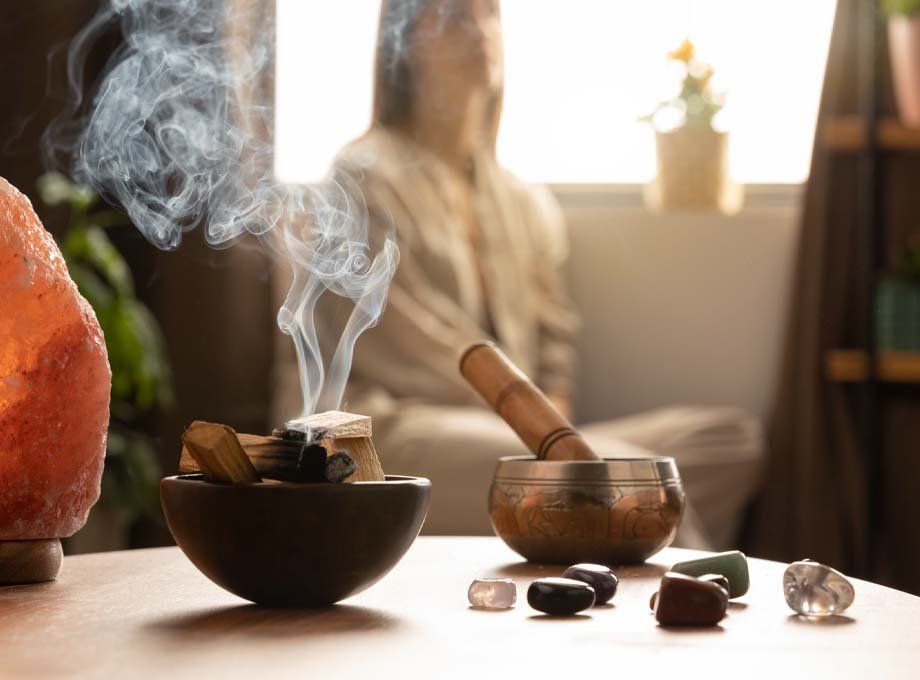

When you compare prices, look at the full picture. A lower fee that leaves out meals or instrument time can cost more in the end. Ask for the inclusions in writing.
February to April and September to November are the most comfortable months in Rishikesh. A short course fits easily into one season, so choose the weather you like and book two to three months ahead.
| Months | What the weather is like | For training |
|---|---|---|
| February to April | Pleasant days and clear skies as the hills warm up. | Best |
| May to June | Very hot, especially in the afternoon. | Hot |
| July to August | Heavy monsoon rain that can disturb travel. | Rainy |
| September to November | Comfortable days, clear skies and mild mornings. | Best |
| December to January | Cold mornings and evenings. Bring warm layers. | Good with warm clothes |
Avatar Yoga School is in the Swargashram area of Rishikesh, near Omkar Cafe. Fly into Dehradun or take a train to Haridwar, then continue by road. To join, send an enquiry, choose a batch and pay the booking advance.

Jolly Grant Airport in Dehradun is the nearest, about 35 km from Rishikesh. Taxis run from the airport to town.
Haridwar railway station is about 25 km away, with regular trains from Delhi and other large cities.
Rishikesh is about 240 km from Delhi, which takes five to six hours by taxi or bus.
Rules and visa categories can change, so confirm the right one for a short course on the official Indian visa portal or with your embassy. A 30 day e-Tourist visa counts from your first arrival and is enough for most short courses.
Sort out your visa and insurance early, practise sitting quietly for a few minutes each day and pack simple, comfortable clothes. You do not need an instrument or any musical training.
Short, direct answers on instruments, safety, certificates, fees and travel.
Talk to our team directly. We reply on WhatsApp and phone.
WhatsApp us Call +91 78309 61407Tell us your preferred month and your experience. The team will reply with batch dates, the fee and what is included.
Check batch datesWhatsApp us